


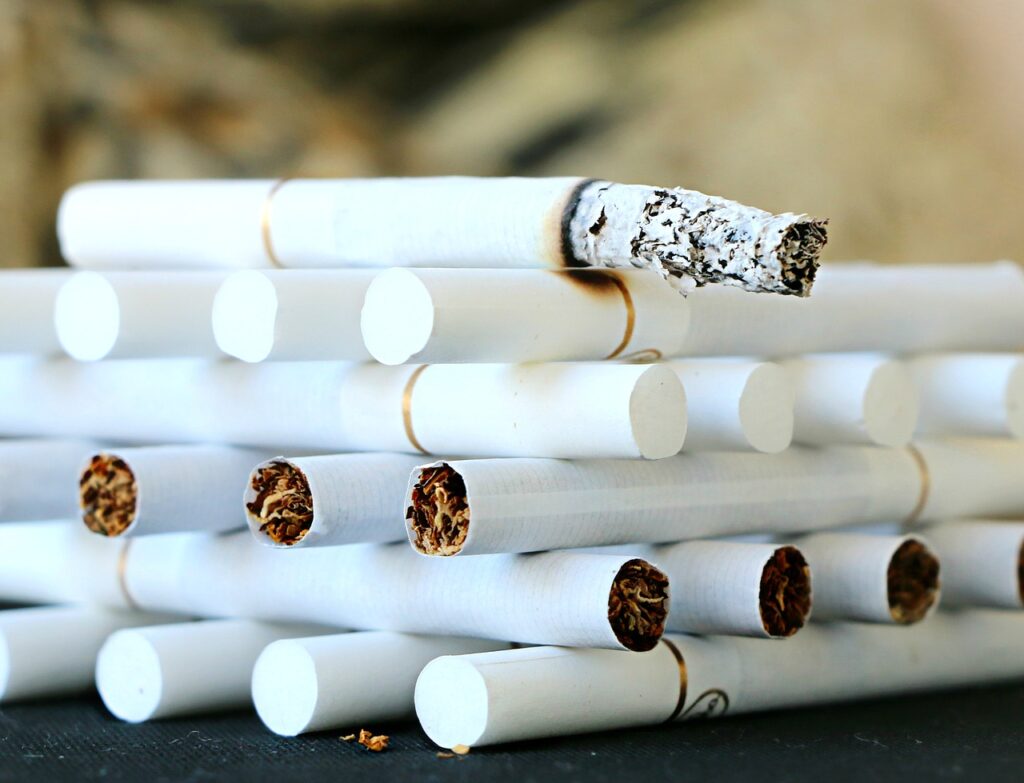
Plastic straws and totes also have received widespread attention as pollutants. But another, much more significant, the synthetic difficulty has been slipping beneath the radar cigarette filters.
Cigarette butts comprising plastic blockers are the most littered item in the entire world.
“Many smokers assume the filters are made of a biodegradable material,” states Elizabeth Smith, that operates on tobacco control policy in the University of California San Francisco.
In actuality, filters are made from cellulose acetate — a kind of plastic which may take as much as a decade.
But today the European Union is breaking down with this hidden issue. New rules will need the tobacco industry to finance the cleanup up of cigarette stubs, within a broader initiative to lessen single-use vinyl things.
Cigarette filters are poisoning our surroundings — but do they do anything to assist smokers’ lungs?
Nick Mallos, director of the group’s Trash Free Seas program, says that”a lot of the found on shores are just left behind by beachgoers.” After four days, half the fish had died, showing that cigarette butts”seep in into the aquatic environment and are poisonous and fatal to living animals,” says Thomas Novotny, emeritus professor of global health at San Diego State University, who was involved in the study.
Tobacco smoke contains about 250 harmful chemicals, including heavy metals, arsenic and polonium-210, a highly radioactive substance that has been used in assassinations. At least 69 of these chemicals are known to cause cancer.
Filters were engineered to reduce lung cancer by blocking toxins.
However, by the mid-1960s, researchers realised that the tar and nicotine they were trying to filter out were the very substances that made cigarettes satisfying to smokers.
The companies kept the filters but made them less useful to allow through that hit of nicotine.
Bradford Harris dug deep into tobacco company archives while a graduate student of history and technology at Stanford University.
He writes that tobacco companies decided to keep the filters as a “marketing tool,” while ensuring that smokers still received the crucial nicotine hit. They made claims about the health benefits of filters that the World Health Organization calls “fraudulent.” CNN contacted the Tobacco Manufacturers’ Association, which represents quite a few big tobacco companies in the UK, for opinion, but didn’t get a reply.
While blockers did obstruct any toxins, also they made cigarette smoke simpler to inhale which encouraged smokers to puff more often. Filters also shifted the manner tobacco burns, really increasing some viruses from the smoke.
With filtered cigarettes, prices of the most common type of lung cancer brought on by filterless smoking diminished. But rates of a different kind of lung cancer — adenocarcinoma — improved.
“The survival rates of the two types of cancer are roughly the same,” says David Wilson,
a pulmonologist the University of Pittsburgh Medical Center, including that there’s not any persuasive evidence that filters” have a beneficial impact on overall lung cancer survival.”
In short, filters did not improve smokers’ health. But they did worsen our environment.
Pollution solutions
In some cities around the world, fees are already levied on cigarette packets to fund street cleaning, while in other places, litterbugs are fined.
Mervyn Witherspoon, an expert in the chemistry of cigarette filters, believes a better solution would be to implement biodegradable cleaners. He is an advisor to Greenbutts, a company which has developed a screen made of natural materials including flax, hemp and cotton.
But Elizabeth Smith, the US-based tobacco policy expert, says biodegradable filters still contain toxins that could take a long time to degrade.
And smokers might feel”allowed” to litter biodegradable cleaners, she adds, which could make the problem worse.
In October 2018, the European Parliament backed a radical proposal to oblige EU countries to remove 50% of plastic from cigarette filters by 2025, and 80% by 2030.
However, EU country representatives later rejected these reduction targets. Instead, tobacco companies will be made responsible for funding awareness-raising campaigns, the provision of public ashtrays and waste collection, and will have to add labels to packets of filtered cigarettes, stating that they contain environment-damaging plastic.
Meadhbh Bolger, the resource justice campaigner at Friends of the Earth, says the new laws are”a substantial first step” but believes that governments should go beyond these measures and set binding targets.
“We expect that authorities will recognise that using a world we can live on is much more important than the interests of the tobacco market.”
You might also want to read This Is The Best Way To Quit Smoking