



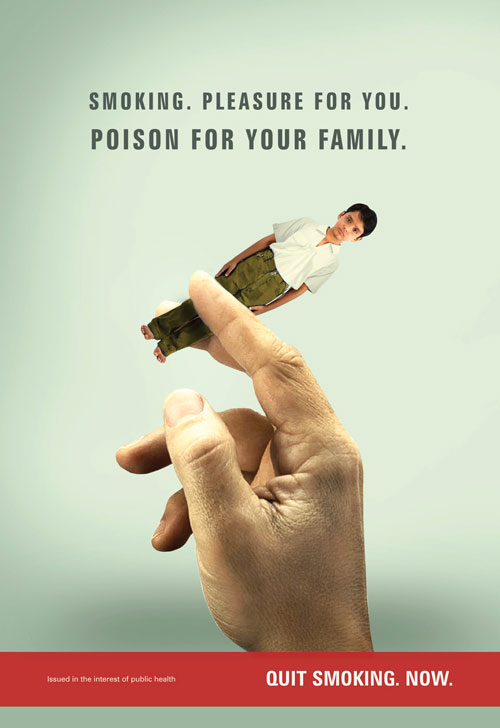
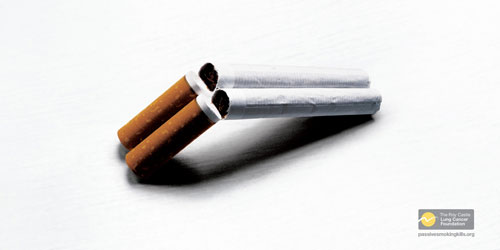
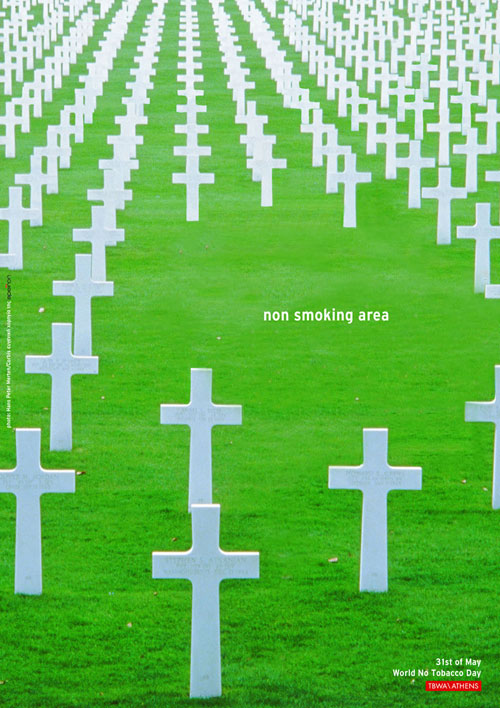
When you are designing an advertisement to get a social campaign you’re given the freedom to discuss some decency limits and shock people, here are the best 16 stop smoking ads ever created.
Why do people need to be shocked?
So that we may find the message to them obviously. That is why a lot of awareness campaigns concerning topics like lung cancer are so gruesome and frightening.
In this article, you will find 16 examples of print advertisements from anti-smoking advertising campaigns in addition to unofficial ads or flyers made by designers to improve awareness concerning the pitfalls of being a smoker.
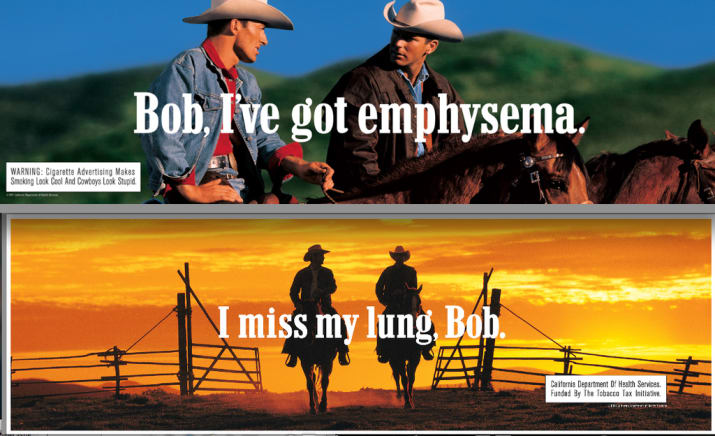

Striking and memorable anti-smoking campaigns and anti cigarette advertisements do an amazing job raising awareness about all ailments nicotine can cause, and also the multiple negative consequences it has on our own lives.
As recent studies show, tobacco has taken over 480,000 lives in the last year, and the amount is 30 times as many for individuals afflicted by smoking-related ailments.


The worse part of this story is all that smoking affects nonsmokers too; since they can not avoid the collection of damaging chemicals they’re surrounded with. Exposure to second-hand smoke killed 2.5 million of non-smoking people since 1964.


Anti cigarette advertisements were not really given credit before, as nobody really believed few psychological TV images could make a difference.
The same no smoking advertisements were broadcasted in different states and had roughly the same positive outcome on people moving and asking doctors to help them quit.
In just 3 years (2013 to 2016) the ordinary speed of cigarette consumption in the state has gone down from 19.3 to 16.8%.


Another reassuring effect in the state’s quit smoking campaigns was that the number of individuals interested to stop. Evidence-based and independent research one of which the functions of Web Coach and Florida Outline revealed that 93,100 Floridians adopted among AHEC (Area Health Education Center) methods to renounce to smoke.
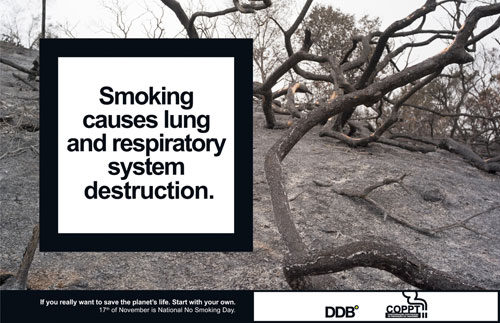

They have been targeted with even more aggressive anti smoking advertisements ever since 2010, which led to cutting youth smoking rates by nearly 50 percent (from 8.3 to 4.3 percent) from 2014.
Research has been conducted on youths aged between 13 and 17, and in many different high schools among which there were such that’d greater than 7.5% smokers. The nationwide average at the time was 9.2, also moved down to 7 according to the nation’s tobacco control program.
Consequently, Florida did not give up on its own quit smoking ads, but instead made sure they would reach even larger crowds. These are the best-known and Best examples:
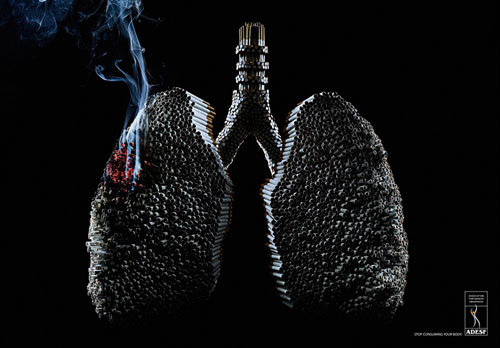

Real life tales
The campaign is still active in 2017 and contains also second-hand smoke sufferers whose life was threatened by frequent exposure to harmful toxins. A particular set of participants also speaks of smoke negative impact on diagnosed issues and health conditions.


To enhance the overall consciousness of the direct injury smoking imposes on smokers’ and secondhand smokers’ health state.
To invite smokers to seek out expert help when quitting
To encourage smokers to prevent consuming smokes around non-smokers to be able to guard their families.
Are anti smoking campaigns effective?
Inhaling cigarette smoke is presently the third death cause globally, but also one that may be avoided. Therefore, many states across the world are organizing no more smoking attempts to inspire folks to give up this harmful habit.
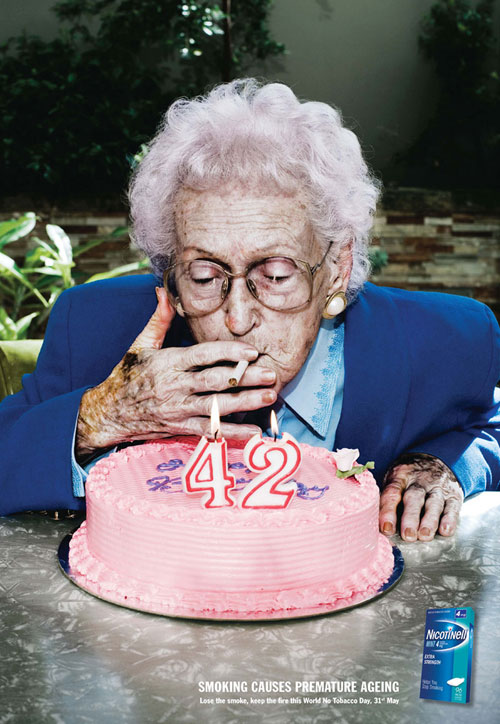

What’s the purpose of an anti smoking advertisement?
The main aim of all anti-smoking campaigns would be to assess the effectiveness of public proof and paid/unpaid anti-smoking media messages.
Where is data coming from?
Expert advertising agencies from Massachusetts, Michigan, and California conducted non-smoking advertising campaigns targeting several focus groups. The effects of their ads were assessed in the Media Campaign Resource Book of the Centers for Disease Control and Prevention, which detected 186 focus groups involving 1500 adults and kids, and a total number of 118 aired ads and additional concepts.
The center used traditional bibliographic sources and the service of MEDLINE to find published literature about the effect of earlier anti-smoking campaigns arranged in the States, but also considered different health departments’ reports from the states’ authorities.


The Center reviewed 8 advertising strategies targeting smokers in order to convince them to quit. These were: dependence, youth access, secondhand smoke inhalation, cessation, industry manipulation, long-term consequences, short-term effects, and intimate rejection.
For each of the eight classes, the study demonstrated ineffective and effective strategies and analyzed those regressively comparing in the exact same time the cost effectiveness in both states.

Findings
Most participants distinguished secondhand smoke and business manipulation as the most powerful incentives for them to reduce smoking.
Other effective advertisements were the ones related to cessation and addiction, despite the fact participants consented those only functioned combined with secondhand smoke and industry manipulation campaigns.
In accordance with them, romantic rejection, short and long-term effects weren’t that effective, as ads should be more aggressive and direct so as to work.

A historical overview of anti-smoking campaigns
Anti-smoking efforts were initiated by political health departments and cancer charities working to reduce tobacco consumption by highlighting all of smoking’s worst and most dangerous effects.


The pioneer advertisements and commercials stop smoking ads were predominantly addressing cessation and mentioned smoking’s possible role in causing lung cancer and passive smokers’ problems.
Read More => A smoke-free childhood


At the moment, they were created with an optional tone, but as time went by and the issue became more serious, ads were becoming more aggressive and discussed publicly erectile dysfunction and physical beauty as possible smoking impacts.
More than anybody else, those commercials aimed to increase youth awareness of this issue, in particular in Great Britain where the government spends over #30 million annually to reduce tobacco consumption.
Read More => How To Help Your Friend to Quit Smoking
Launched in 2005, ‘For a life without tobacco’ has circulated all member states, and helped countless people to quit smoking.
The next attempts occurred in 2007/2008, when New York’s Department of Health triggered its initial anti-smoking efforts, and encouraged free nicotine gum and patch applications for smokers interested to quit. We have seen lots of stop smoking ads and the need to shock to be effective.

You might also like:
http://getstopsmoking.com/the-public-is-ready-for-smoke-free-zones/