


Smoking kills.
The science behind that stone-cold assertion has been undeniable for many years. But smoking stays the primary explanation for preventable deaths in the US and around the globe.
Given all that we find out about smoking, why do individuals have a lot hassle quitting? As a dependancy psychiatrist and neuroscientist, it’s a query I often get from my sufferers and acquaintances. The 2-part reply I give them is easy: Quitting is tough, and most of the people go about it the mistaken means.
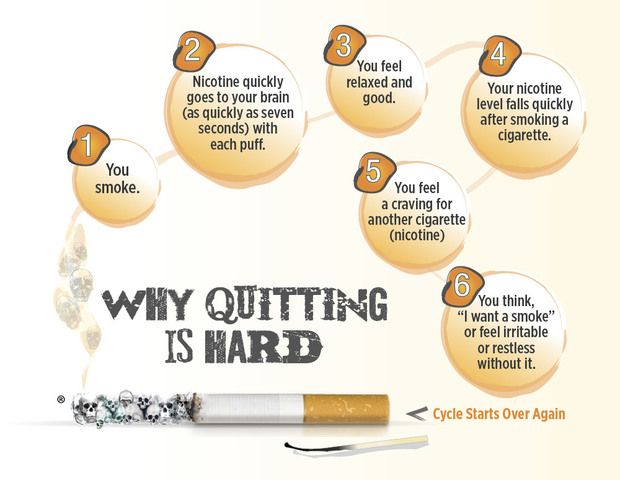
To elucidate, let me briefly delve into the science of dependancy. The mind has a built-in reward-based studying system. Doing one thing that makes you’re feeling reasonable offers a reward that reinforces the conduct. Every puff of a cigarette delivers extremely addictive nicotine to the bloodstream, and thus to the mind. As nicotine binds to receptors within the brain, it triggers a rush of dopamine, a neurotransmitter that performs a job in motivating conduct. Every time a smoker smokes, it reinforces a mind pathway that claims, “That is nice, does it once more.”
As a result of reward-based studying is about speedy satisfaction, and nicotine is fast-acting, people who smoke get caught in a behaviour loop that’s powerful to interrupt. Behavioural economics has proven that even data of the long-term penalties of smoking can’t compete with the speedy optimistic reinforcement — our brains privilege quick gratification over future rewards.
Breaking this behaviour loop is not any straightforward feat. E-cigarettes, partial nicotinic receptor agonists like varenicline and alternative nicotine therapies akin to patches and gum provide a path away from combustible cigarettes. However, they nonetheless ignore the psychological root of the issue. Given nicotine’s half-life of roughly two hours, alternative nicotine therapies assist most with physiological withdrawal, making it attainable for people who smoke to chop right down to about ten cigarettes a day. Under that quantity, context-dependent triggers drive psychological cravings, which aren’t affected by approaches akin to nicotine alternative.
Strategies akin to chewing gum or utilising substitutes like carrot sticks deal with surface-level distractions and haven’t been proven to yield lasting outcomes. Using willpower to give up, often known as going chilly turkey, works for some individuals, however most analysis has shown it to be ineffective, and even counterproductive in some instances, as a result of the willpower a part of the mind (the prefrontal cortex) goes offline when burdened, which is a primary set off for smoking.
What’s the answer? Altering the behaviour loop.
To assist my sufferers in giving up, I coach them to make use of mindfulness strategies designed to interrupt dangerous habits. This works by hacking the reinforcement course of in two methods: It updates the reward worth of smoking within the mind, and it helps individuals experience out their cravings as a substitute for performing on them.
Step one of a mindfulness strategy includes changing into conscious of the speedy results of smoking. For instance, when I’ve my sufferers take note of tobacco, they describe a “burning feeling” as they inhale, and point out that cigarettes don’t style good and the odour of smoke is disagreeable. Being attentive to the expertise of smoking is kind of completely different than distractedly smoking, whereas observing a smartphone or speaking to somebody. Potential quitters then be taught strategies to experience out cravings by specializing in related bodily sensations akin to tightness, warmth, contraction, and the like, and quickly being conscious of them over time as they arrive and go (quite than reactively and routinely smoking, distracting oneself, or doing one thing else to make the sensations go away).